


Florida's Aging Condos: A Growing Opportunity for the Construction Industry?
Florida's condominium market is undergoing a significant period of change. New structural inspection requirements, tighter reserve funding obligations and increasing scrutiny of aging buildings are forcing condominium associations to take a closer look at the condition of their properties.
Much of the discussion has focused on the financial implications for condominium owners. However, there is another question worth considering: what does this mean for Florida's construction industry?
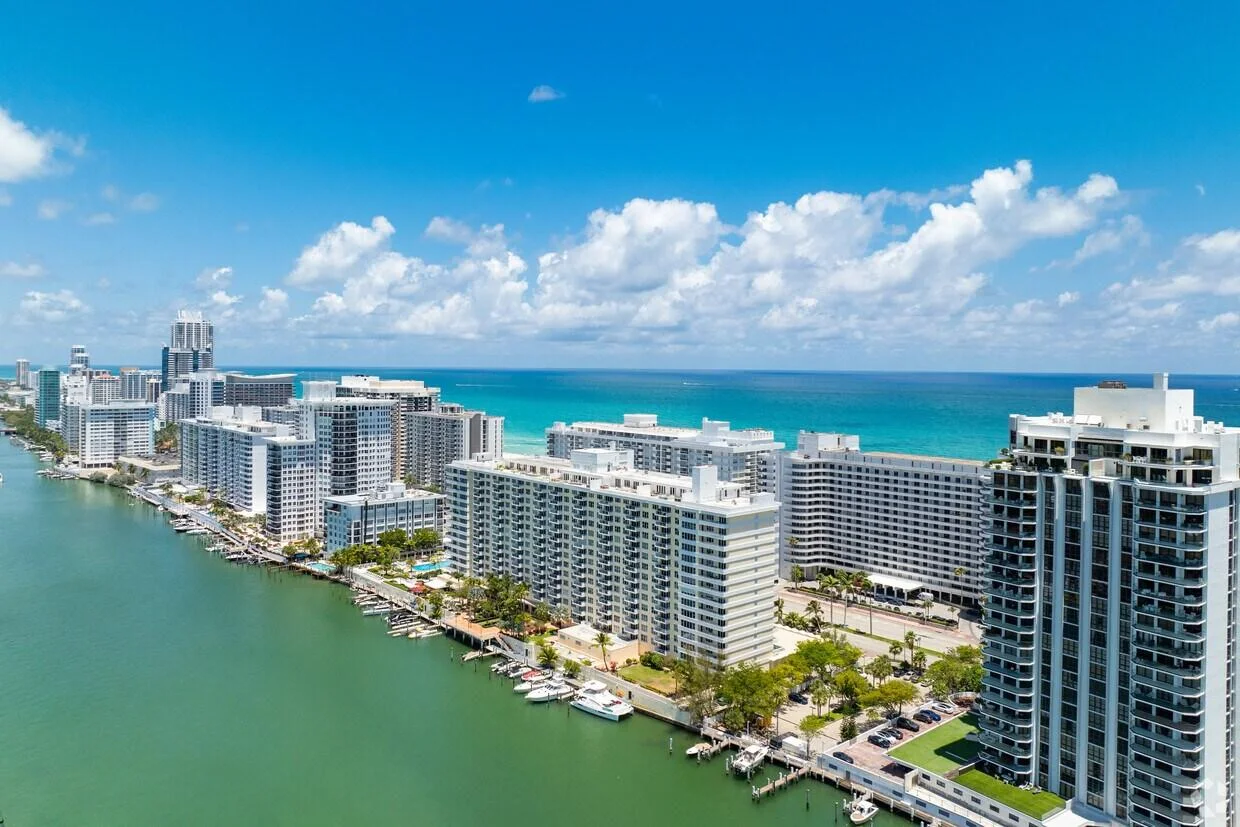
Across South Florida, where aging waterfront condominiums form a substantial part of the residential landscape, the changes could create opportunities for contractors specializing in structural rehabilitation, concrete restoration, waterproofing and major building renovations.
The opportunity, however, is not necessarily as straightforward as an increase in construction demand.
A Changing Regulatory Environment
Following the 2021 collapse of Champlain Towers South in Surfside, Florida introduced legislation intended to improve the structural safety and financial preparedness of condominium buildings.
Under Florida Statute 553.899, qualifying condominium and cooperative buildings of three or more habitable stories generally require milestone structural inspections when they reach 30 years of age, followed by inspections every 10 years. Local authorities may require inspections beginning at 25 years where environmental or other local conditions justify an earlier assessment.
These inspections are intended to identify structural deterioration and determine whether further investigation or repairs are necessary.
Separately, Structural Integrity Reserve Studies (SIRS) require qualifying condominium associations to assess the condition, estimated remaining useful life and anticipated repair or replacement costs of major building components.
These include structural systems, roofs, plumbing, electrical installations, waterproofing and fire protection systems.
Florida's 2025 legislative reforms introduced greater flexibility around reserve funding and inspection requirements. Most existing qualifying, owner-controlled associations were required to complete their initial SIRS by December 31, 2025, with certain associations permitted to coordinate their studies with milestone inspections by December 31, 2026.
For the construction industry, these requirements could have implications well beyond regulatory compliance.
From Deferred Maintenance to Construction Projects
One of the more significant potential consequences is the identification of maintenance and rehabilitation work that may have been postponed for years.
Aging condominium buildings can require substantial investment in concrete repairs, structural components, waterproofing, building envelopes and mechanical or electrical systems.
Some of this work would have been necessary regardless of legislative changes. What the new requirements introduce is a more formal process for assessing building conditions, documenting deficiencies and planning future expenditure.
This distinction matters.
The legislation does not automatically create new construction projects. It can, however, bring previously unidentified or deferred work into sharper focus.
A structural inspection identifying deterioration may lead to further engineering investigations, repair specifications, contractor procurement and ultimately construction activity.
Likewise, reserve studies can provide associations with a clearer understanding of the financial commitments required to maintain their buildings over the longer term.
For contractors, this raises the possibility of a more visible pipeline of rehabilitation and restoration opportunities.
However, identifying necessary work and securing approval to undertake it are two very different stages.
The Funding Challenge
Perhaps the biggest uncertainty surrounding this potential market is how condominium associations will finance the work.
Unlike a traditional development project backed by an institutional investor or developer, condominium rehabilitation is often funded through association reserves, special assessments or borrowing.
Where reserves are insufficient, owners may face substantial additional financial contributions.
Florida's updated legislation provides associations with certain funding alternatives and greater flexibility, but that does not eliminate the underlying cost of major repairs.
For contractors, this creates an important commercial consideration.
An association may have a detailed engineering report identifying significant work, yet still need to secure financing, obtain owner approvals where required and establish a realistic procurement strategy.
Consequently, the number of buildings requiring repairs should not be confused with the number of funded projects ready to proceed.
Contractors evaluating this market will need to understand not only the technical scope but also the financial position and decision-making processes of prospective clients.
A Different Type of High-Rise Construction
South Florida has an established market of general contractors experienced in delivering large residential towers.
However, constructing a new high-rise and rehabilitating an occupied condominium building present very different challenges.
Restoration projects can involve restricted access, limited staging areas, temporary protection, resident coordination and construction activity taking place around occupied apartments and shared facilities.
Structural repairs may also uncover additional deterioration once work begins, requiring revised engineering assessments, changes to scope and adjustments to the construction schedule.
On waterfront properties, exposure to moisture and salt-laden environments can add further complexity to the assessment and repair of building components.
These conditions can make rehabilitation work difficult to price and execute with the same level of certainty as a clearly defined new-build scope.
Contractors must also manage the expectations of condominium boards, property managers and residents, whose priorities may differ considerably from those of a conventional commercial construction client.
Experience in occupied-building construction, structural restoration and managing unforeseen conditions could therefore become an important competitive advantage.
Where Do General Contractors Fit?
Not every rehabilitation project will be suited to a large general contractor.
Specialist concrete restoration, waterproofing and building envelope contractors are already established in this market and may be better positioned to undertake clearly defined repair packages.
However, larger rehabilitation programs can involve multiple disciplines, extensive structural work, building systems upgrades and complex sequencing.
These projects may require broader construction management capabilities, particularly where several major scopes must be coordinated within an occupied property.
For general contractors considering this sector, the question is whether their existing operational capabilities translate effectively into rehabilitation work.
A company experienced in delivering multimillion-dollar residential developments may have strong project management, procurement and subcontractor relationships. That does not necessarily mean it has the specialist experience required to assess and manage the risks associated with structural restoration.
Entering the market successfully could require partnerships with specialist contractors, additional technical expertise or dedicated teams familiar with occupied-building rehabilitation.
There is also a commercial question around project selection.
A rehabilitation contract may appear attractive in value but carry considerable uncertainty around existing conditions, resident access, scope changes and the allocation of responsibility for unforeseen repairs.
The ability to assess those risks before committing to a project could prove just as important as the ability to deliver the work itself.
Could This Become a Longer-Term Construction Market?
Florida's condominium safety requirements are not limited to a single round of inspections.
Milestone inspections recur, while qualifying associations must continue to assess and plan for major building maintenance and replacement requirements.
This creates an ongoing regulatory framework rather than a temporary compliance exercise.
As buildings age and associations develop more detailed maintenance and funding plans, there is a reasonable basis to expect continued demand for inspection, engineering and rehabilitation services.
What remains uncertain is the scale and timing of the resulting construction expenditure.
Some associations may already have well-funded maintenance programs. Others may require significant repairs but face financial constraints that delay procurement.
The eventual distribution of work will also vary by building condition, location, association finances and the complexity of required repairs.
For contractors, the opportunity may therefore be less about a sudden surge in available projects and more about the gradual development of a market where technical specialization, financial due diligence and client management become increasingly important.
What This Means for Florida's Construction Industry
Florida's condominium reforms are primarily about building safety, accountability and long-term maintenance.
Yet their implications extend into the construction market.
For specialist restoration contractors, the requirements may bring greater visibility to future repair programs. For general contractors, they raise questions about diversification, project selection and whether existing capabilities can be adapted to rehabilitation work.
For construction professionals, the growing emphasis on existing-building restoration could also increase the importance of experience in structural rehabilitation, occupied-building operations and complex renovation projects.
The scale of the opportunity remains difficult to quantify, and not every identified repair will become an immediately funded construction contract.
Nevertheless, Florida's aging condominium stock represents a segment of the built environment that will require continued investment.
The more interesting question for contractors may not be how much work exists, but how much of it they are equipped to deliver profitably.
As Florida's inspection and reserve requirements continue to shape decisions across condominium associations, that distinction could become increasingly important.
Sources & References
Florida Legislature — Florida Statute 553.899: Mandatory Structural Inspections. Requirements for milestone inspections of qualifying condominium and cooperative buildings, including inspection intervals and structural assessments.
https://www.flsenate.gov/Laws/Statutes/2026/553.899Florida Legislature — Florida Statute 718.112: Condominium Association Requirements. Statutory provisions covering Structural Integrity Reserve Studies, reserve funding obligations and applicable building components.
https://www.flsenate.gov/Laws/Statutes/2026/718.112Florida Department of Business and Professional Regulation — Condominium Inspections. Official guidance on milestone inspections, reserve studies and condominium compliance requirements.
https://condos.myfloridalicense.com/inspections/Florida Department of Business and Professional Regulation — Legislative Timeline. Overview of Florida condominium safety reforms, including changes introduced under House Bill 913 in 2025.
https://condos.myfloridalicense.com/timeline/Associated Press — Florida Condo Owners Face Higher Costs as New Regulations Take Effect. Reporting on the financial implications of condominium safety requirements, including reserve funding and special assessments.
https://apnews.com/article/62de80fcc5de498309d9fea2b78a2984